
Commercial Project Types
Manufacturing Plant Roofing in Winston-Salem, NC
Roofing Over Active Production Lines: Manufacturing Plants in the Triad
Tobaccoville's large manufacturing complex, the Caterpillar plant at Union Cross, the Deere-Hitachi facility along the Kernersville corridor, and the Hanesbrands operations scattered through Forsyth and Davidson counties all run production around the clock or close to it. A roof project on any of these buildings has to fit inside a production schedule that rarely pauses for construction, which shapes almost every decision we make before a crew sets foot on the deck.
Process Heat, Steam, and Roof Deck Stress
Manufacturing roofs take on a different kind of stress than office or retail roofs. Process heat rising from production floors, steam line penetrations, and exhaust from finishing or curing operations all raise the interior temperature and humidity load the roof assembly has to manage. We evaluate vapor drive on plant roofs before specifying insulation, since a standard commercial insulation package can trap moisture inside the assembly when the space below runs consistently warmer and more humid than a typical office building.
Where a plant has isolated hot zones, over a curing oven, a dye line, or a boiler room, we detail the roof assembly differently in those areas, often with higher-temperature-rated membrane or additional vapor retarder layers, rather than applying one uniform spec across a roof that has meaningfully different conditions section to section.
FM Global and Insurance-Driven Specs
Most of the larger manufacturing plants we work with carry FM Global coverage, and FM's approval requirements for roof assemblies, insulation, and fire-rated cover boards are stricter than code minimums in several respects. We check the current FM RoofNav listing for any assembly before it goes into a submittal, and we confirm the fastening pattern and cover board selection meet FM's wind and fire classification for that specific building rather than assuming a generically FM-approved system automatically qualifies for that plant's insurance rating.
Skylights, smoke vents, and roof-mounted exhaust for dust collection systems common in manufacturing settings all carry their own FM listing requirements, and we cross-check those components against the base roof assembly's rating before installation, since a mismatched component can drop the whole roof out of its FM classification.
Scheduling Around Shift Production
Plants running two or three shifts don't have a quiet window the way an office building does, so we sequence tear-off and installation by roof zone, coordinated with the plant's production schedule so no zone sits open above an active line. Hot work permits, fire watch during any torch-applied flashing detail, and coordination with the plant's safety office are standard on every manufacturing job, not an exception.
- FM RoofNav verification for the specific assembly before ordering material
- Vapor drive analysis in high-heat or high-humidity production zones
- Hot work permit and fire watch coordination with plant safety staff
- Roof-zone sequencing matched to the active production schedule
- Dust collection and exhaust penetration flashing rated to the base assembly
- Structural review before any new rooftop equipment addition
- Warranty term matched to the plant's capital asset depreciation schedule
Metal Retrofit vs Membrane Recover on Older Plant Roofs
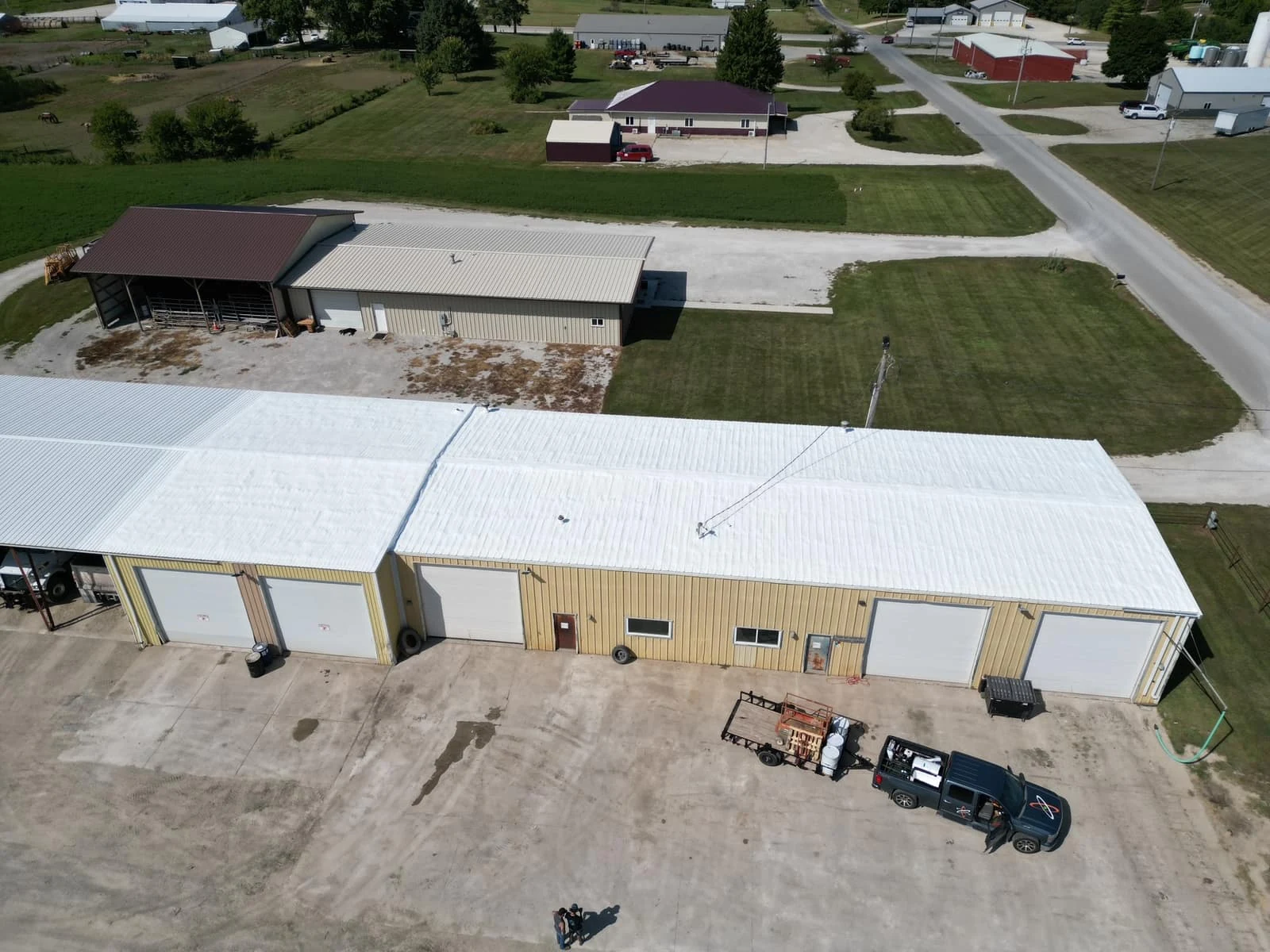
A meaningful share of the older manufacturing stock in Lexington, Thomasville, and along the Kernersville corridor carries original standing-seam or through-fastened metal roofs that are decades past their design life but structurally sound. On those buildings a metal retrofit system, a new standing-seam panel installed over purlins added above the existing roof, often makes more sense than tear-off, since it avoids shutting down production underneath an open deck and adds a drainage plane above the old leaking panels.
Where the existing roof is single-ply membrane rather than metal, we evaluate recover feasibility the same way we would on any commercial building, weighing deck moisture condition and existing insulation R-value against a full tear-off, and we're direct with plant engineering about which option actually extends service life versus which one just defers the real fix.
Warranty Terms That Match Plant Ownership Cycles
Manufacturing plant owners think about roofs on a capital asset timeline, and we build the warranty conversation around that. A plant expecting a 15-year hold gets a warranty term and system selection sized to that horizon rather than defaulting to the longest warranty available regardless of fit. We provide manufacturer data sheets, wind uplift calculations for the plant's exposure category, and FM compliance documentation as part of every closeout package so plant engineering has what it needs for insurance renewal and capital asset records.
Frequently Asked Questions From Plant Engineering Teams
Can a reroof happen without shutting down our production line?
In nearly every case, yes. We zone the work by roof section and coordinate directly with your production schedule so an active line is never running under an open deck.
Does our FM Global coverage require a specific roof assembly?
Often, yes, and it's more specific than code minimums. We check the current RoofNav listing for the exact assembly, fastening pattern, and cover board before it goes into a submittal.
Is a metal retrofit cheaper than a full tear-off on an old plant roof?
Usually, and it avoids taking production areas offline the way a tear-off does. We evaluate the existing structure first to confirm it can carry the added retrofit framing.
How do you handle roof penetrations for dust collection systems?
We flash each penetration to match the base roof assembly's fire and wind rating, since a mismatched dust collection curb can drop the whole roof out of its FM classification.
What warranty length is typical for a manufacturing plant roof?
It depends on the plant's expected ownership horizon, but 15- to 20-year manufacturer warranties are most common on the membrane and metal systems we install in this market.