
Commercial Roofing Services
Built-Up Roofing (BUR) in Winston-Salem, NC
Built-Up Roof Systems on Winston-Salem's Older Commercial Stock
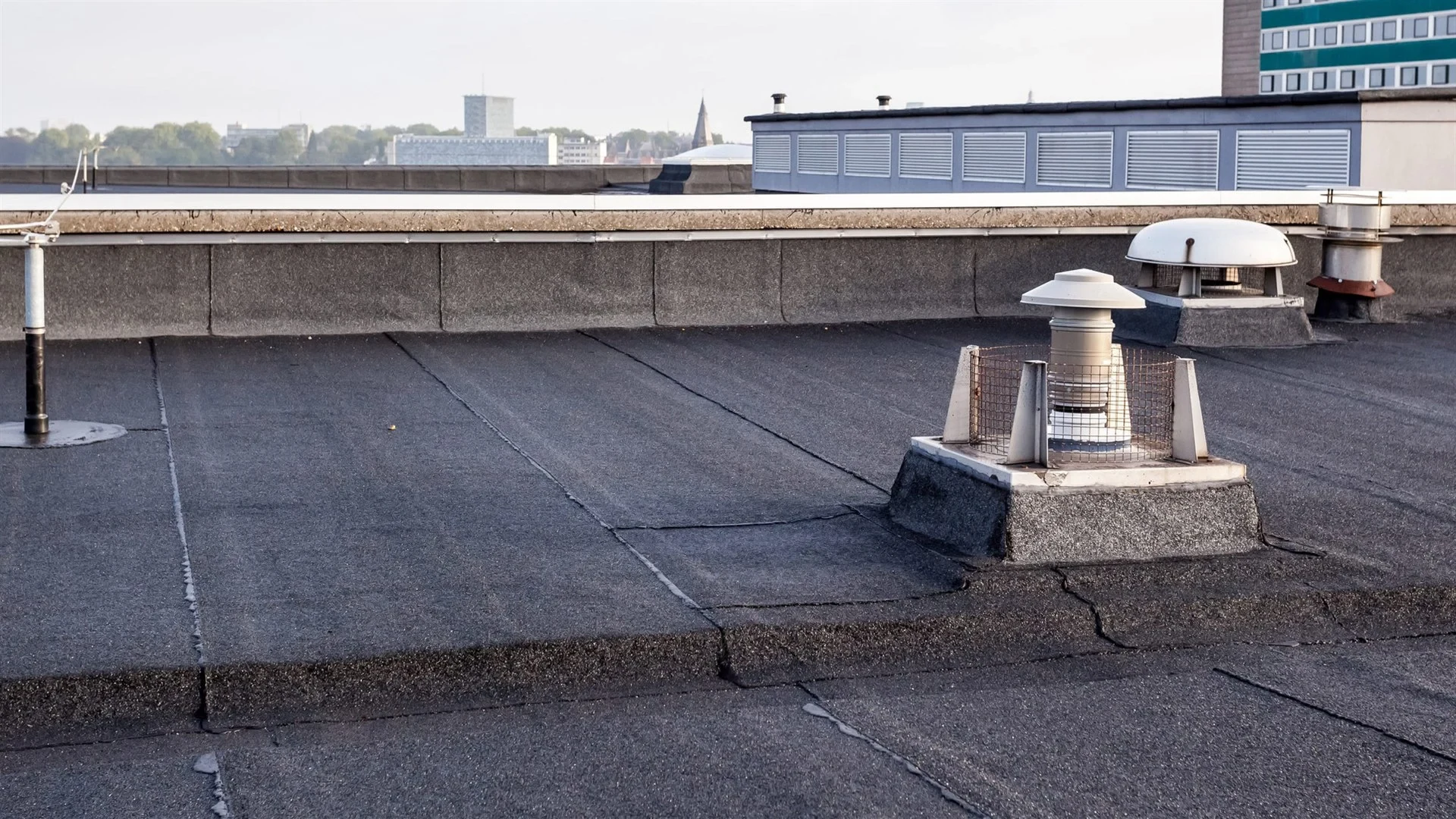
Built-up roofing, alternating plies of asphalt and felt or fiberglass reinforcement finished with gravel or a smooth cap, is less common as new construction today than it was decades ago, but it's still present on a meaningful share of Winston-Salem's older commercial buildings, and it's still a system we specify where heavy rooftop equipment loading or a specific fire rating calls for it.
Where Legacy BUR Shows Up in This Market
Some of the oldest commercial buildings downtown and around Winston-Salem's older manufacturing corridor still carry original or multiple-times-recovered built-up systems, often with a gravel surface that's been added to over the years without a clear record of ply count. Before we propose anything on a legacy BUR roof, we core it to establish exactly how many plies and recover layers are present, because North Carolina's building code limits how many layers can remain before tear-off becomes mandatory, and a gravel-surfaced roof can hide that history under the surface.
Asbestos-containing materials are a real possibility in roofing products installed before the 1980s, and we don't proceed with demolition on a legacy roof without appropriate testing and handling protocol where age and construction era warrant it.
Ply Count and Surfacing Options
New BUR installations typically run three or four plies, with surfacing options including gravel ballast, a smooth asphalt cap, or a mineral-surfaced cap sheet. Gravel ballast adds weight the deck needs to support but offers strong fire resistance and UV protection for the plies underneath; a smooth or mineral surface reduces dead load but requires more attention to maintaining surface integrity over time.
- Existing ply count and layer history confirmed by core sample before any new work
- Asbestos assessment performed on pre-1980s roofing material before demolition
- Ply count and surfacing type specified against deck load capacity
- Fire rating requirements confirmed for the building's occupancy classification
- Drainage and slope assessed, since BUR is unforgiving of standing water at seams
- Warranty tier confirmed against full assembly compliance
Deck Load and Structural Considerations
Gravel-ballasted BUR is among the heaviest common low-slope systems, and older decks weren't always designed with a future gravel recover layer in mind. We check structural capacity before adding weight to an existing deck, particularly on older manufacturing buildings where the original design load may not have anticipated the roof's current condition after multiple recover cycles over the decades.
Recover vs. Tear-Off on Legacy BUR
A BUR roof that's already at or near the code-permitted layer limit, or one where core samples show wet insulation under the surface, isn't a recover candidate regardless of how sound the surface looks. We document core findings and layer count in the proposal so the tear-off recommendation, when that's the outcome, is backed by data rather than a general age-based assumption.
Fire Classification and Insurance Documentation
Built-up roof assemblies carry their own tested fire classification, and on older buildings where original construction documents are incomplete or missing, an insurance underwriter or lender may request current documentation of the roof assembly's fire rating before renewing coverage or financing. We can document the installed assembly's specification against its tested fire classification for a new BUR system, which gives an owner a current record to provide when that request comes in rather than relying on decades-old paperwork that may not reflect the roof's actual current condition.
This becomes especially relevant on manufacturing buildings carrying legacy BUR roofs, where insurance requirements have tightened over the years in ways the original roof specification never anticipated.
Warranty Expectations on BUR Systems
Manufacturer warranties on new BUR installations follow the same tier structure as other systems, tied to ply count, surfacing type, and full assembly compliance. Because so much of our BUR work involves an aging building with an incomplete maintenance record, we also document existing condition thoroughly at the start of a project, which matters both for warranty registration and for any future ownership transfer.
Coordinating Tear-Off Timing With Building Operations
Legacy BUR removal on an occupied downtown or manufacturing building generates more dust and odor than single-ply tear-off typically does, particularly where gravel ballast has to be removed and hauled off before the underlying plies come up. We coordinate this phase with building management around HVAC intake locations and operating hours, since gravel removal and hot asphalt work, where torch or kettle methods are used on the new system, both carry operational considerations that a single-ply reroof doesn't raise in the same way.
Questions on Built-Up Roofing Projects
Is built-up roofing still installed on new projects?
Less often than single-ply systems, but it's still specified where heavy equipment loading, specific fire rating requirements, or an existing BUR maintenance history favor staying within the same system.
How do you know how many plies an old BUR roof has?
We core the roof in multiple spots to count plies and any recover layers added over the years, since a gravel surface can hide that history and code limits how many layers can remain before tear-off is required.
Could an older BUR roof contain asbestos?
It's a real possibility on roofing material installed before the 1980s, and we conduct appropriate assessment and handling protocol before any demolition on roofs from that era.
Does a gravel-ballasted BUR roof need a structural check?
Yes. Gravel ballast is heavy, and we confirm the deck can carry that load, particularly on older buildings that have already been recovered more than once.
What warranty applies to a new BUR installation?
Warranty tier depends on ply count, surfacing type, and full assembly compliance with the manufacturer's current specification, confirmed before the contract is signed.