
Commercial Roofing Services
Roof Drains & Scuppers in Winston-Salem, NC
Roof Drains and Scuppers for Winston-Salem Commercial Buildings
Drainage failure is behind more commercial roof leaks than membrane failure is, and it's the piece of the roof system most often overlooked until standing water is already causing damage. We treat drains and scuppers as a designed system sized to code requirements rather than openings that happen to be cut into the roof, because undersized or poorly maintained drainage shortens the life of an otherwise sound membrane faster than almost anything else.
Drainage Design and Code Requirements
Commercial building code sets minimum drainage capacity requirements based on roof area and the local rainfall intensity rate, and secondary drainage, overflow scuppers or a secondary drain system, is required in case the primary system is blocked or undersized during a heavy rain event. We calculate required drain and scupper capacity against the actual roof area they serve and confirm the building has adequate secondary drainage, which matters most during the kind of sustained, heavy rainfall this region gets from hurricane remnants tracking in from the coast late in the season.
Internal Drains vs. Scuppers
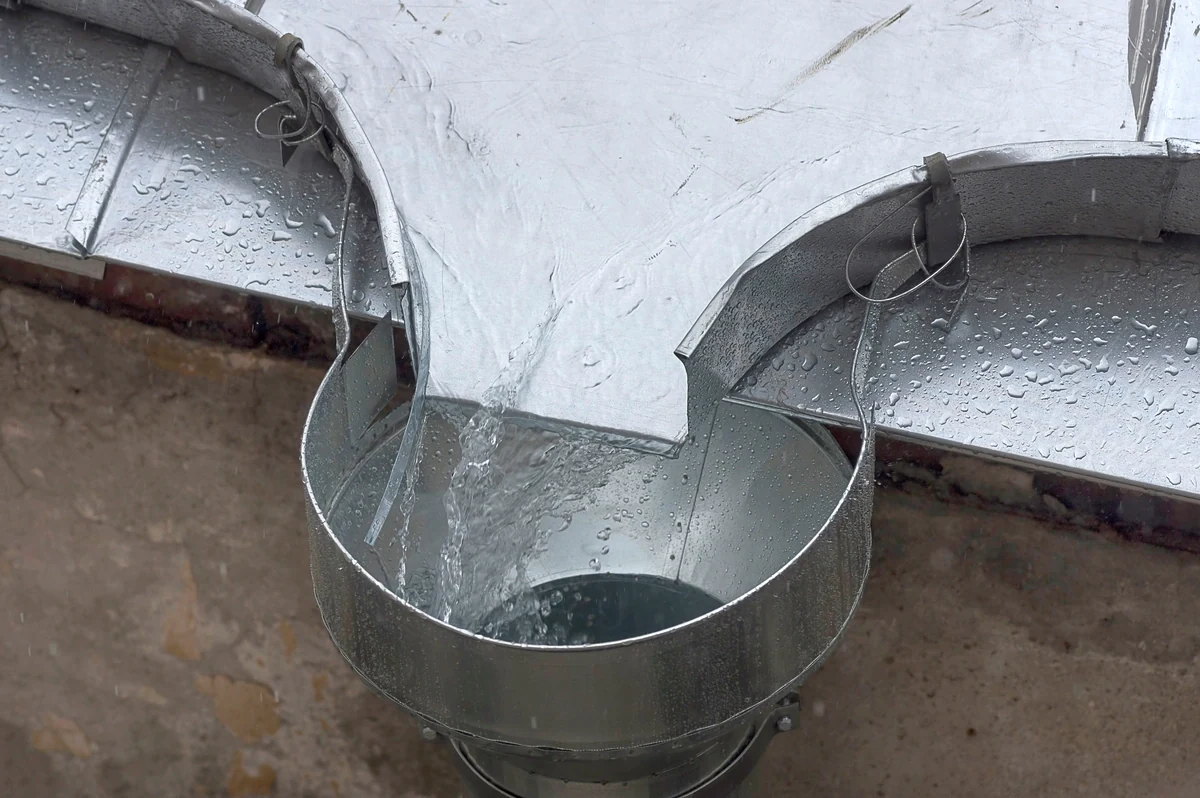
Internal roof drains route water through the building's interior plumbing system and require a properly sloped roof deck directing water to the drain location, along with a functioning strainer to keep debris out of the drain line. Scuppers are wall openings that let water exit directly off the roof edge, often paired with an external gutter and downspout system. Many of the buildings we work on in this market use a combination, internal drains as primary with overflow scuppers as the code-required secondary system. We assess which configuration fits a given roof's structural layout and existing plumbing when specifying a new drainage system or correcting an underperforming one.
- Drain and scupper capacity calculated against served roof area
- Secondary/overflow drainage confirmed present and functional
- Deck slope checked to confirm water reaches drain locations as designed
- Strainers and debris guards installed or replaced at all primary drains
- Drain-to-membrane integration detailed per manufacturer specification
- Scupper and downspout sizing matched to serviced roof section
Common Drainage Problems We Find
Clogged strainers from tree debris and pollen buildup are the most frequent issue, especially given how much this region's tree cover sheds onto low-slope roofs through spring and fall. Beyond blockage, we regularly find drains that were never properly integrated with the membrane during original installation, a gap at the drain bowl connection that lets water track under the membrane rather than through the drain, which shows up as a leak that looks unrelated to the drain itself. We also find low spots on aging roofs where structural deflection has created ponding away from the original drain location, meaning the drainage design that worked at installation no longer matches the roof's current slope.
Ponding Water and Membrane Life
Standing water on a membrane roof accelerates UV degradation at the ponding area, adds structural load the building wasn't necessarily designed to carry long-term, and increases the odds of algae or debris buildup that further blocks drainage. Code generally requires roofs to drain within 48 hours of a rain event; where we find persistent ponding beyond that, we look at whether the fix is drain relocation, additional drainage capacity, or tapered insulation to correct the slope, rather than treating it as something to monitor indefinitely.
Repair and Replacement of Drain Components
Where a drain bowl or clamping ring has corroded or the membrane integration has failed, we replace the drain assembly and reintegrate it with the surrounding membrane to manufacturer detail. Scupper repair often involves resealing or replacing the through-wall sleeve and the exterior metal flashing where corrosion or movement has opened a gap. We document drain condition as part of any inspection, since a drain issue found early is a straightforward repair, while one left long enough to cause interior water damage becomes a larger and more expensive problem.
Tapered Insulation as a Drainage Correction
On roofs where ponding is caused by structural deflection or a drain that's simply in the wrong location for how the roof actually slopes, adding drainage capacity alone doesn't fix the underlying problem. Tapered insulation systems reshape the roof surface to direct water toward existing or new drain locations, correcting slope without altering the structural deck itself. This is typically specified during a recover or reroof project rather than as a standalone repair, since it requires removing and reinstalling the membrane over the new insulation profile, but it's often the most durable fix for a roof with a chronic ponding location that drain clearing alone never resolves.
Drain and Scupper Questions
How do you know if a roof's drainage is undersized?
We calculate required drain and scupper capacity against the actual roof area and compare it to what's installed. If the roof shows persistent ponding beyond the 48-hour drain window code generally expects, that's a strong signal the existing system is undersized or blocked.
What's the difference between a primary drain and a secondary scupper?
Primary drains route water through the building's interior plumbing; secondary or overflow scuppers or drains are a code-required backup in case the primary system is blocked or overwhelmed during heavy rain.
Why does standing water shorten roof membrane life?
Ponded water accelerates UV degradation at the membrane surface, adds sustained structural load, and increases algae and debris accumulation that further impedes drainage, compounding the original problem.
Can a drain leak show up as damage somewhere else on the roof?
Yes, if the drain wasn't properly integrated with the membrane, water can track under the membrane from the drain connection point and surface as a leak that appears unrelated to the drain itself.
How often should drains and scuppers be cleared of debris?
At minimum twice yearly, aligned with spring and fall maintenance visits, with additional clearing after any significant storm that brings down tree debris.