
Commercial Roofing Services
Wind & Storm Damage Roof Insurance Claims in Winston-Salem, NC
Wind and Storm Damage Roof Insurance Claims in Winston-Salem
Winston-Salem commercial roofs face two distinct wind events in a typical year, and they damage roofs in different ways. Spring and summer bring fast-moving severe thunderstorms with short bursts of straight-line wind that hit hard and move on, often leaving damage concentrated at a roof's weak points, loose flashing, an aging parapet cap, a section where fasteners had already started backing out. Later in the season, the remnants of tropical systems that track inland from the Gulf or Atlantic coast bring a different pattern: sustained wind over many hours combined with heavy, prolonged rainfall, which stresses the entire roof system rather than just its weak points and raises the odds of wind-driven water intrusion even where the membrane itself holds.
Where Wind Damage Starts on a Commercial Roof
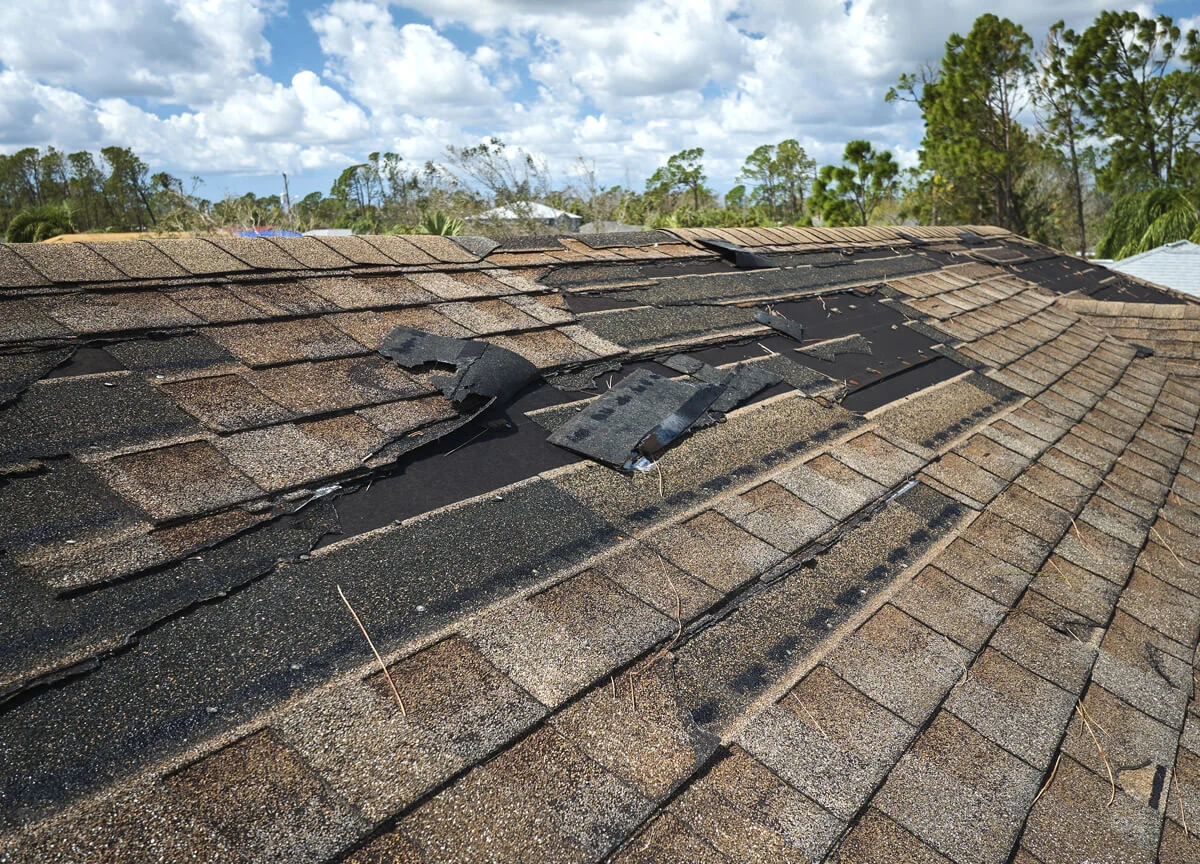
Wind damage on a low-slope roof almost always starts at an edge, parapet coping, edge metal, or a mechanical curb, because that's where wind uplift generates the most force. Once a section of edge metal or coping lifts, wind gets underneath the adjacent membrane and the damage spreads from that starting point outward. We check these transition areas first on any post-storm inspection, since they're where uplift damage originates even when the field of the roof looks intact.
Wind-Driven Rain and Secondary Water Damage
A storm doesn't need to tear the membrane to cause a claimable loss. Sustained wind-driven rain can push water past flashing details that shed normal rainfall fine, and that water tracks into the building at points that aren't always visible from the roof surface. We document interior water staining alongside roof-level findings and correlate the two where the connection is clear, since insurance documentation for wind claims often needs both halves of that picture.
Documenting Uplift for a Wind Claim
Wind claims benefit from documentation that shows the direction and mechanism of the damage, which edge lifted first, where fasteners pulled through, whether membrane seams separated under uplift pressure or tore from debris impact. We photograph the failure points in sequence, note wind direction where it's evident from the damage pattern, and correlate the event to any known storm activity for the date in question.
Debris Impact on Top of Wind Uplift
Winston-Salem's tree canopy means a wind event often brings debris impact along with straight uplift force, a limb or larger branch coming down on a membrane roof punctures or tears it directly, which is a different damage mechanism from wind lifting an edge on its own, even though both can happen in the same storm. We document the two separately, since a puncture from debris and a seam failure from uplift call for different repair details even when they show up on the same claim.
Emergency Mitigation Before the Adjuster Arrives
When a wind event leaves an active leak, protecting the building comes first, we provide emergency tarp and dry-in to stop ongoing water intrusion, documenting the original damage with photos before any tarping covers it. Carriers generally expect reasonable mitigation to prevent further loss, and having that documented protects the claim rather than complicating it.
What This Documentation Is, and Isn't
We're your roofing contractor, not a public adjuster, our role is inspecting the roof, documenting wind damage with photos and a written assessment, and producing a repair scope that reflects the full extent of what happened. We don't negotiate with the carrier, characterize what a settlement should be, or guarantee claim approval; that determination sits with the adjuster working against the specific policy.
Working From the Same Documentation Twice
Property owners occasionally need the same wind-damage documentation more than once, first for the insurance claim itself, then again for a lender or property-management review, or for a warranty inquiry with the roofing manufacturer if the damaged section was under an active system warranty. We keep the documentation format consistent across those uses so the same photos, measurements, and written assessment can support each one without a separate inspection every time.
Insurance Claim Questions
Does a fallen tree limb count as wind damage for a claim?
Typically yes, since the tree came down because of wind, we document the impact, the resulting roof damage, and photograph the debris before it's cleared, which supports that connection for the claim.
What's the difference between wind damage from a thunderstorm and from a hurricane remnant?
Thunderstorm winds tend to be short, intense bursts that cause localized damage at a roof's weak points, while tropical remnants bring sustained wind over hours combined with heavy rain, which stresses the whole roof system and increases the chance of wind-driven water intrusion even where the membrane itself holds.
Should I tarp a wind-damaged roof before the adjuster sees it?
Emergency mitigation to stop ongoing water intrusion is standard and usually expected by carriers, but we photograph and document the damage first, before any tarping, so the original condition is on record.
Can wind damage be present without visible membrane tears?
Yes, wind can loosen fasteners or partially lift a membrane at the edge or seams without an obvious tear, which can go unnoticed until the next storm makes it worse. That's part of why a post-storm inspection matters even when nothing looks obviously wrong from the ground.
Do you handle emergency tarping if wind damage needs immediate mitigation?
Yes, we provide emergency tarp and dry-in service alongside the documentation, so the building is protected from further water intrusion while the claim moves forward.